
- All
- Product Name
- Product Keyword
- Product Model
- Product Summary
- Product Description
- Multi Field Search
 English
Views: 0 Author: Site Editor Publish Time: 2026-11-10 Origin: Site


EPDM is the undisputed workhorse of the modern beverage industry. Facilities worldwide rely on it to safely transfer water, beer, wine, and clear juices. It delivers exceptional heat resistance and long-lasting durability for these standard processes. But the moment you introduce fats, oils, or lipid-based emulsions into the fluid path, the rules change entirely. EPDM undergoes rapid, severe chemical degradation when exposed to these substances. Ignoring this incompatibility creates massive operational blind spots. Using the wrong hose material for fat-containing beverages leads directly to product contamination. You also face sudden line failures and strict regulatory compliance violations. In this article, we explore exactly why this degradation occurs at a molecular level. You will learn how to identify hidden risks in your beverage lines. Finally, we will guide you through selecting safe, fully compliant hose alternatives to protect your product integrity.
While standard EPDM food hose applications excel in high-temperature, non-fat beverage transfer, the material is fundamentally incompatible with petroleum, animal, and vegetable oils.
Exposure to lipids causes EPDM to swell, soften, and lose its pressure rating, posing severe safety and sanitary risks.
Beverages containing dairy, cream liqueurs, or oil-based extracts (like CBD or citrus oils) require alternative hose materials such as NBR (Nitrile), UHMWPE, or PTFE.
Selecting a replacement requires balancing the new material's oil resistance against its CIP/SIP (Clean-in-Place / Sterilization-in-Place) temperature thresholds.
You cannot effectively manage equipment failures without understanding the root cause. The chemical makeup of an EPDM hose makes it highly vulnerable to specific substances. Plant managers often mistake EPDM for a universal solution. It performs beautifully for clear liquids. It fails miserably for others. We must examine exactly why this happens.
To understand the failure, we must look at the underlying polymer chemistry. EPDM functions primarily as a non-polar polymer. Oils, animal fats, and plant-based lipids are also non-polar substances. In chemistry, a well-known rule states "like dissolves like." When a non-polar beverage contacts a non-polar rubber, the rubber actively absorbs the liquid. The hose matrix essentially tries to dissolve into the beverage. This reaction breaks down the tight molecular bonds within the rubber compound. The material loses its structural density. It becomes spongy, weak, and highly porous.
Chemical incompatibility creates a severe business problem for processing facilities. Using the wrong material guarantees expensive, unplanned downtime. You risk compromising entire product batches due to flavor tainting. Premature hose replacement becomes a frustrating, frequent necessity. Operations lose significant revenue when production lines sit idle. Maintenance teams waste valuable labor hours constantly swapping out failed hoses. A misapplied hose acts as a ticking time bomb on your production floor. It will fail precisely when you least expect it.
We must define what successful fluid transfer actually looks like. A reliable beverage transfer process meets very specific operational criteria. It ensures zero flavor transfer between different beverage batches. The hose maintains complete structural integrity under maximum working pressure. It withstands frequent sanitation cycles without degrading. Finally, it achieves full compliance with FDA and 3-A Sanitary Standards. Standard EPDM food hose applications easily hit these targets for clear, water-based liquids. They fail these exact criteria instantly when fats enter the system.
Many operators assume their product lines are entirely safe. However, modern beverage trends introduce hidden fats and oils daily. Formulations change constantly to meet consumer demands. You must actively identify which products threaten your transfer lines.
Milk, cream liqueurs, and yogurt-based drinks pose obvious, immediate threats. They contain high levels of animal butterfats. These butterfats aggressively attack standard rubber surfaces. They degrade the polymer matrix over time. EPDM simply cannot withstand prolonged exposure to dairy products. Even skim milk contains enough residual fat to cause long-term damage. Plant-based alternatives like oat milk and almond milk also contain natural oils. These vegan options will degrade EPDM just like traditional dairy.
The wellness beverage sector introduces new material risks daily. CBD-infused waters and drinks containing MCT oil are increasingly popular. Manufacturers also use heavily concentrated citrus oils and botanical extracts. These ingredients act as potent, aggressive solvents. They immediately attack the inner tube of a standard hose. Emulsifiers keep these oils suspended in the liquid. This ensures the oil constantly contacts the hose wall during transfer. The degradation happens much faster than most operators anticipate.
Some chemical threats hide in plain sight on the production floor. Many proprietary flavoring syrups utilize oil-based carriers. Technicians often overlook these ingredients during standard equipment audits. They assume a simple flavor syrup is completely benign. In reality, the hidden oil carrier destroys the hose from the inside out. Bulk syrup transfers often run at elevated temperatures. Heat accelerates the chemical breakdown of the rubber. You must scrutinize every syrup formulation entering your facility.
Common Beverage Risk Profiles
Beverage Type | Hidden Lipid/Oil Threat | Risk to EPDM |
|---|---|---|
Milk & Yogurt Drinks | Animal butterfats | High degradation |
CBD Waters | MCT carrier oils | Severe solvent action |
Citrus Energy Drinks | D-limonene (extracts) | Rapid material breakdown |
Flavor Syrups | Oil-based carriers | Moderate to High swelling |
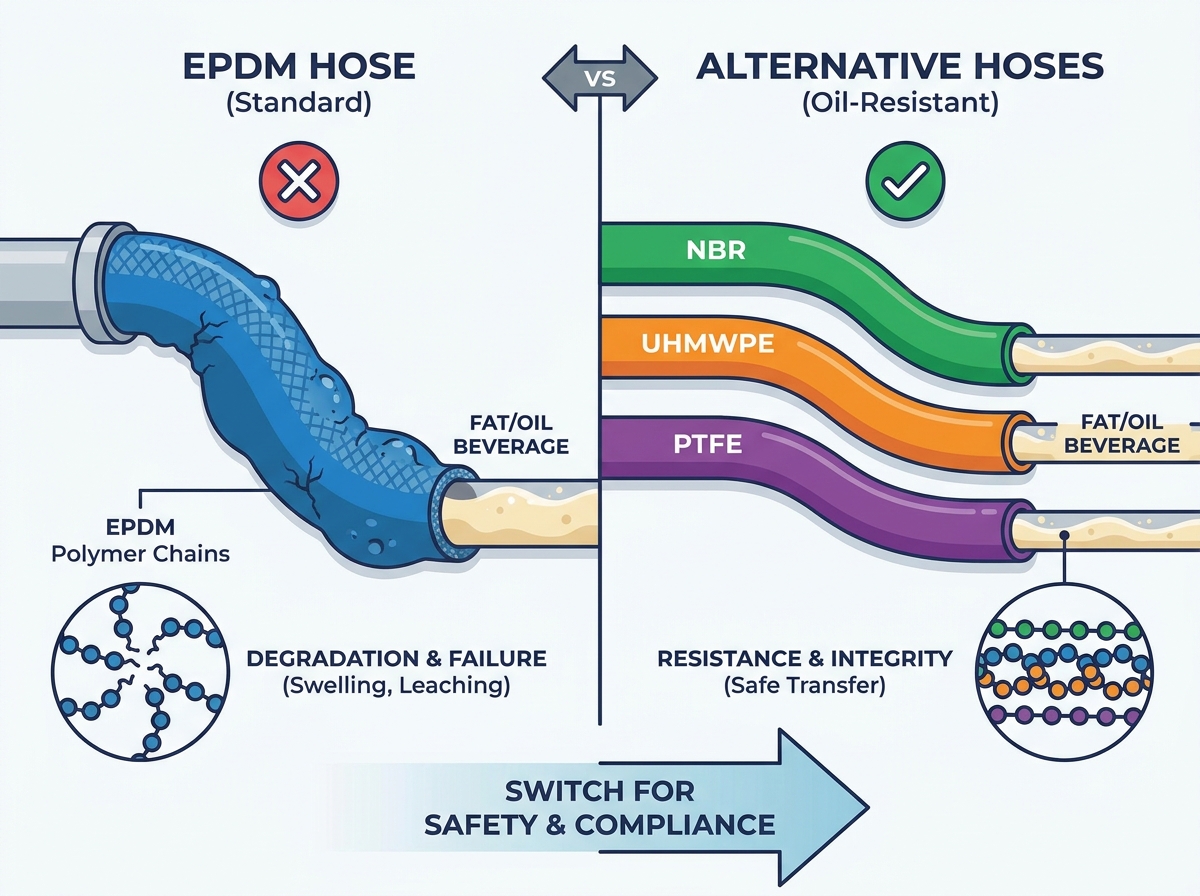
When an incompatible fluid enters your line, failure begins immediately. The degradation happens in distinct, highly dangerous stages. You must recognize these warning signs before a catastrophic failure occurs.
The most immediate physical reaction is severe material swelling. The hose inner tube expands dramatically as it absorbs the oil. This expansion reduces your internal flow rate significantly. It also structurally weakens the hose walls. The rubber becomes spongy to the touch. It loses its critical ability to hold internal pressure. Operators might notice the hose feels unusually soft or heavy. This swelling is irreversible. Once the rubber absorbs the oil, you cannot repair it.
As the rubber softens, it physically breaks apart. Degraded rubber compounds can leach directly into the beverage stream. This ruins delicate flavor profiles instantly. You will likely face failed quality assurance tests. Customers notice the tainted, rubbery taste immediately. This damages brand trust and leads to costly product recalls. Using a standard EPDM food hose for oils guarantees flavor contamination. The leached chemicals also pose potential health and safety concerns.
Cleaning protocols create the highest danger periods for compromised hoses. A hose weakened by oil exposure loses its structural strength. It becomes significantly more likely to burst open. Standard CIP/SIP (Clean-in-Place / Sterilization-in-Place) cleaning cycles utilize extreme conditions. They push high-temperature water, steam, and harsh chemicals through the line. They also generate sudden pressure spikes. A weakened hose will violently fail under these intense conditions. A burst hose sprays scalding water and chemicals across the production floor. This creates a massive safety hazard for your employees.
Regulatory compliance relies entirely on smooth, easily cleanable surfaces. Swollen or blistered internal tubes create microscopic traps. Bacteria hide safely inside these porous gaps. Standard sanitation chemicals cannot reach them effectively. Biofilms develop rapidly inside the degraded rubber. This directly violates FDA, USDA, and 3-A compliance standards. A regulatory auditor will flag this immediately during an inspection. They will force you to halt production until you replace the non-compliant equipment.
You must replace vulnerable hoses with application-specific, oil-resistant materials. The sanitary hose industry offers three primary alternatives. Each material provides distinct benefits and specific operational trade-offs. You must weigh these factors carefully.
NBR (Nitrile) Hoses
Nitrile serves as the standard alternative for dairy and fatty foods. It is highly resistant to animal and vegetable fats. It prevents the swelling and leaching associated with EPDM. However, it requires a clear operational trade-off. NBR generally possesses a lower maximum temperature threshold than EPDM. You must carefully adjust your CIP/SIP protocols accordingly. High-heat sanitation can damage NBR prematurely. You must monitor your steam cleaning temperatures closely. Nitrile offers excellent flexibility, making it easy for operators to handle.
UHMWPE (Ultra-High Molecular Weight Polyethylene)
This represents the most versatile option available today. UHMWPE easily handles almost all chemicals, fats, and oils. It provides exceptional cross-compatibility for mixed-use beverage lines. You can run dairy, citrus, and beer through the same hose safely. The trade-off involves physical flexibility. The material is considerably stiffer than standard rubber. This rigidity may impact routing and ergonomics on your busy production floor. Operators might struggle to bend it around tight corners. It requires careful measurement to ensure proper fitment.
PTFE (Teflon) Lined Hoses
PTFE represents the premium solution for highly difficult applications. It delivers ultimate chemical and oil resistance. It also boasts exceptionally high heat tolerance, easily surviving aggressive SIP cycles. The primary trade-off is the initial purchase price. PTFE hoses require a larger upfront financial investment. They also require careful handling by floor staff. Bending the hose too tightly can kink and permanently ruin the inner liner. Once kinked, the hose must be discarded. You must train your staff on proper handling procedures.
Switching your transfer lines requires a highly methodical approach. You cannot simply guess which material works best. Follow these specific steps to ensure a safe, compliant transition.
Start by thoroughly reviewing your current beverage recipes. Identify the exact lipid percentage of every fluid passing through the line. Map out the precise chemical composition of your flavorings and extracts. Never assume a liquid is oil-free without checking the formulation sheet. Speak directly with your ingredient suppliers. Ask them if their syrups contain hidden carrier oils. Document every single fluid that will touch the new hose.
Sanitation limits often dictate your final material choice. Ensure the alternative hose can withstand your specific cleaning temperatures. It must also resist your daily chemical cleaning agents. Common sanitizers like caustic soda and peracetic acid destroy certain polymers. Verify chemical compatibility before making a purchase. Review your standard operating procedures for cleaning. If your facility relies on prolonged steam sterilization, you must select a high-heat material like PTFE.
A hose must physically fit your existing plant infrastructure. Evaluate your required maximum working pressure. Check the minimum bend radius required to navigate your facility layout. A stiff hose will not work in a cramped manifold. Confirm you have the correct sanitary hose fittings. Tri-Clamp connections must securely mate with the new hose material. Ensure the crimp collars are designed specifically for the new polymer. Improperly crimped fittings will leak under pressure.
Never execute a facility-wide rollout blindly. Start with a localized, highly monitored pilot test. Install the new hose on a single transfer line first. Document its performance closely over several weeks. Increase your inspection frequency for the new hoses during the initial 90 days. Monitor for any signs of external wear or internal degradation. Check the fittings for minor leaks. Once the pilot test succeeds, you can confidently upgrade the rest of your facility.
Protecting your beverage lines requires matching the exact material to the media. The decision matrix is relatively straightforward once you understand the chemistry. Keep your EPDM hoses for water, beer, and clear juices. Transition immediately to NBR or UHMWPE for any beverage containing fats, oils, or lipid-based emulsions. Do not let initial purchase prices deter you from making the necessary switch. The upfront cost of an application-specific, oil-resistant hose is truly negligible. It costs absolutely nothing compared to a contaminated product batch. It is far cheaper than suffering an FDA compliance failure or a catastrophic blowout. Take immediate action to secure your facility. Review your current facility flow diagrams today. Identify any lines handling dairy, syrups, or extracts. Then, consult with a certified sanitary hose specialist. They will help you match the exact inner tube polymer to your specific beverage profiles.
A: No. Milk contains butterfat, which breaks down EPDM rubber, leading to swelling, bacterial harbor points, and potential line failure. NBR (Nitrile) is the standard recommendation for dairy.
A: Degradation speed depends on the fat concentration, temperature, and exposure time. However, even trace oils at elevated temperatures can compromise the hose's structural integrity within weeks.
A: Yes. Look for sponginess, external blistering, a gummy texture on the inner tube during inspection, or a noticeable reduction in the internal diameter (swelling).
A: Generally, no. Many essential oils, particularly D-limonene found in citrus, act as aggressive solvents on EPDM. A UHMWPE or PTFE-lined hose is required for these applications.